Here's a series that I wish that I could like more than I did. While it had great action sequences and some nice art with a premise that should have worked well, the whole thing got mired in how the story didn't spend enough time developing its characters while lining them up like bowling pins to be killed off. It's too bad because if it had put a little more effort into that, Akame ga Kill could have been a much better show.
It starts off well enough with the main character, Tatsumi, arriving in the capital hoping to find a way to help his poor village on the outskirts of the kingdom. Before long, he discovers that the place is actually quite corrupt with very bad people in high places. When taken in for the night by a noble family that turn out to be complete sadists with a taste for torture, he meets the members of Night Raid, a team of assassins with the Revolutionary Army who are tasked with hunting down particularly evil government officials and killing them. Once Tatsumi sees the nobles for the monsters they are he understands that the empire in which he lives is actually rotten, and with that joins the assassins.
From here we follow Tatsumi and Night Raid as they do their part to bring down the empire, killing off corrupt officials and potential threats as the military enlists specialists of their own to deal with the assassins. What makes this fun to watch are the weapons used by the team members and high ranking members of the empire's military called Imperial Arms. They were made 1,000 years earlier and much of the knowledge to create them has been lost, but they are very powerful. Each one is different with its own special power, so we see people running around with rifles with enough oomph to shoot down spacefaring battleships, incredibly powerful armor, teleportation devices, ice attacks, sentient organic Arms, et cetera. This leads to several huge battles as people clash, which is the high point of the show.
Unfortunately, this leads to a lot of the main characters, both heroes and villains, dying. A lot. The problem with this is that Akame ga Kill doesn't spend enough time developing its characters for the viewer to really get hit hard when one of them dies. We'll get a few minutes one episode explaining their past and an episode or two later they'll be dead. The first death or two does have a bit of shock value as the show makes it clear that this will be a thing, but after that it never gets to the point where viewers genuinely worry about who will be next to go, instead developing more of a morbid curiosity as to who will get killed off. As such, there isn't much power to the deaths. It's spectacle and little more. The only person I was sad to see go was Tatsumi since he was built up over the entire series, while everyone else to go was just cannon fodder. Bols is the only other character I feel got barely enough development to deserve some sympathy when he died. By the end of the series, there's pretty much a mountain of corpses seeing as so many characters got killed off and mostly I found myself trying to remember why I should care about them in the first place. If the show had spent more time developing people and being more selective as to who would die, it would have had a much stronger impact than going the route that it did with this.
At least the show looked pretty and had a decent soundtrack. The characters were reasonably well designed with some over the top aesthetics from time to time. Seryu stood out here with her prosthetic limbs that could be replaced with ridiculous artillery. Susanoo when he was transformed looked pretty bad ass. Esdeath got the military dominatrix thing down and I look forward to the day when someone can truly pull off some solid cosplay of her. The animation of the battles also had a nice sense of speed and seemed to get the gore to a good level with just the right amount of gratuity to match the depravity of the empire. I also liked how people's faces contorted when they let their inner demons get the better of them. Music too was well done. There's not much to say about it, but the tunes worked well with the show.
On the whole, I don't regret the time I spent watching Akame ga Kill. The action made for a fun ride and it was nice to see the empire get its comeuppance, but the way in which the show took the axe to so many of its characters felt like killing for the sake of killing and it became easy to get numb to it. This show could have been a lot more interesting if its characters were better developed. At least then, I'd care more when someone died off. As it stands, the show feels like something to watch on a stream when one has a hankering for a lot of combat with liberal amounts of gore and a relatively straightforward "fight the power" story line, which isn't all together bad, but at the same time it's hard not to feel that Akame ga Kill could have been more than that.
Oh look, it's a video game blog. In an age rife with YouTube gamers something like this is almost quaint...
Showing posts with label anime reviews. Show all posts
Monday, 15 February 2016
Sunday, 24 January 2016
Beautiful Bones: Sakurako's Investigation Anime Review
Look hard enough and you're likely to find anime themed around just about anything. Whether it's cooking, fishing, a myriad of sports, video games, or countless others, it is truly impressive just how many different things the medium can find to hover around. In the case of Beautiful Bones: Sakurako's Investigation, bones play a prominent role through the lead character, Sakurako, who is an osteologist, and, thus, obsessed with the things. This plays into the show being a series of whodunits as she and her assistant, Shoutarou, solve a series of deaths through forensic investigation.
While Sakurako is the person who the show is named for, Shoutarou is the one that it centers around. He's a high school student who happened to befriend Sakurako through a misunderstanding, and largely helps her out as circumstances throw one dead body after the next at the pair. The first few episodes are one-offs with the pair find themselves in situations where they stumble across a dead body. Sakurako is delighted whenever this happens given her field of expertise and is eager to both figure out how the person died and find a way to sneak the bones home to add to her collection (Shoutarou always prevents the latter, so she'll have to settle for collecting animal bones).
Watching her walk through what likely happened is always interesting, as there's a logic behind the techno-babble. She'll bring up a lot of stuff about how bones work, chemicals, or some such, but in the end the cause of death makes sense and isn't bogged down in the explanation. One thing that I didn't like early on in the series was when she would say she was about to solve the case, as it segued into a silly animation sequence where she would put on latex gloves and there would be these weird silhouettes of animals walking by. It was cheesy and nonsensical. I have to assume that the reason it was there was because the studio that made the show felt they needed some sort of catch phrase for when she was about to solve a case, and it also made a nice way to waste a few seconds on repeatable footage for killing time and bringing the budget down a bit. In any case, this was surprisingly off putting for me even though it was such a short sequence, but, thankfully, they did away with it later on in the season, which was a huge relief.
What's also nice is that not all mysteries in the show are murders. There are some circumstances where Sakurako is just trying to figure out how someone died with little to no foul play involved. I particularly liked the episode where she was helping Yuriko (one of Shoutarou's classmates) figure out how her grandmother died. There was still a death to solve, but more so it was about trying to find a way to bring Yuriko a bit of closure in the wake of someone very important to her passing away.
Some of the best bits, though, were anything to do with Hanabusa, a mysterious painter that is involved with many of the deaths and attempted murders that Sakurako has been trying to solve. The guy is obviously very smart and a master manipulator, making for a worth arch rival to her. The only problem right now is that the series ended on a big cliffhanger as of this writing and I have no idea if they ever plan to continue the anime or are they expecting us to get the light novel, which has not been translated into English.
The back and forth between Shoutarou and Sakurako feels very natural as if they're brother and sister, which begins to make sense as we learn more about Sakurako's past. While she can seem cold and distant at times, she obviously cares very much about Shoutarou and always has his best interests at heart. Also, it's humorous when we see a softer side of her should the opportunity for sweets arise, which she is quite fond of. While much of what the pair are investigating is serious stuff, often times there's very good use of lighthearted comedic elements in the banter between them.
Supporting cast also feels reasonably well done. Yuriko is likable enough, and the episode where she tries to help the lost child at the festival makes her out to be quite the sweet girl. Shoutarou's teacher, Ituski, can be fun too. His obsession with plants is almost as intense as Sakurako's is with bones, and he can be quite laid back in so far as teachers go. I noticed that he's voiced by Akira Ishida, which was nice, as I've been a fan of his since Katsura on Gintama. He sure does seem busy these days, being in many of the series I've been watching of late. Hiroki was the only supporting character that I never really warmed up to. Seeing as Sakurako and Shoutarou keep finding corpses, he's the local police officer that often is on the case first when they report what they found. He just seemed too much the stereotypical bumbling, easy going guy, and a bit cookie cutter as a result.
Conversely, the setting for Beautiful Bones felt comparatively unique seeing as the show takes place in Hokkaido. This made for a lot of rather pretty vistas as Sakurako and Shoutarou often ventured of into the wilderness in their travels. As a result, the animation was very colorful with all of the foliage, not to mention a number of scenes at sunset creating golden hues on everything. The detail in the designs of the different scenes and characters are also worth noting, especially places like Sakurako's house.
So, on the whole, the show was a good watch, and I do recommend checking it out. The mysteries are interesting, while the characters add more flavor to the story. My only concern now is that we don't know if there will be a season two, which is a bit worrisome given the ending to the first season. If this is all we'll get and it turns into a "Please Read the Manga!" series, I'll be thoroughly disappointed and have a slightly more bittersweet view of Beautiful Bones.
While Sakurako is the person who the show is named for, Shoutarou is the one that it centers around. He's a high school student who happened to befriend Sakurako through a misunderstanding, and largely helps her out as circumstances throw one dead body after the next at the pair. The first few episodes are one-offs with the pair find themselves in situations where they stumble across a dead body. Sakurako is delighted whenever this happens given her field of expertise and is eager to both figure out how the person died and find a way to sneak the bones home to add to her collection (Shoutarou always prevents the latter, so she'll have to settle for collecting animal bones).
Watching her walk through what likely happened is always interesting, as there's a logic behind the techno-babble. She'll bring up a lot of stuff about how bones work, chemicals, or some such, but in the end the cause of death makes sense and isn't bogged down in the explanation. One thing that I didn't like early on in the series was when she would say she was about to solve the case, as it segued into a silly animation sequence where she would put on latex gloves and there would be these weird silhouettes of animals walking by. It was cheesy and nonsensical. I have to assume that the reason it was there was because the studio that made the show felt they needed some sort of catch phrase for when she was about to solve a case, and it also made a nice way to waste a few seconds on repeatable footage for killing time and bringing the budget down a bit. In any case, this was surprisingly off putting for me even though it was such a short sequence, but, thankfully, they did away with it later on in the season, which was a huge relief.
![]() |
| Such a terrible animation sequence...so glad they got rid of it. |
What's also nice is that not all mysteries in the show are murders. There are some circumstances where Sakurako is just trying to figure out how someone died with little to no foul play involved. I particularly liked the episode where she was helping Yuriko (one of Shoutarou's classmates) figure out how her grandmother died. There was still a death to solve, but more so it was about trying to find a way to bring Yuriko a bit of closure in the wake of someone very important to her passing away.
Some of the best bits, though, were anything to do with Hanabusa, a mysterious painter that is involved with many of the deaths and attempted murders that Sakurako has been trying to solve. The guy is obviously very smart and a master manipulator, making for a worth arch rival to her. The only problem right now is that the series ended on a big cliffhanger as of this writing and I have no idea if they ever plan to continue the anime or are they expecting us to get the light novel, which has not been translated into English.
The back and forth between Shoutarou and Sakurako feels very natural as if they're brother and sister, which begins to make sense as we learn more about Sakurako's past. While she can seem cold and distant at times, she obviously cares very much about Shoutarou and always has his best interests at heart. Also, it's humorous when we see a softer side of her should the opportunity for sweets arise, which she is quite fond of. While much of what the pair are investigating is serious stuff, often times there's very good use of lighthearted comedic elements in the banter between them.
Supporting cast also feels reasonably well done. Yuriko is likable enough, and the episode where she tries to help the lost child at the festival makes her out to be quite the sweet girl. Shoutarou's teacher, Ituski, can be fun too. His obsession with plants is almost as intense as Sakurako's is with bones, and he can be quite laid back in so far as teachers go. I noticed that he's voiced by Akira Ishida, which was nice, as I've been a fan of his since Katsura on Gintama. He sure does seem busy these days, being in many of the series I've been watching of late. Hiroki was the only supporting character that I never really warmed up to. Seeing as Sakurako and Shoutarou keep finding corpses, he's the local police officer that often is on the case first when they report what they found. He just seemed too much the stereotypical bumbling, easy going guy, and a bit cookie cutter as a result.
Conversely, the setting for Beautiful Bones felt comparatively unique seeing as the show takes place in Hokkaido. This made for a lot of rather pretty vistas as Sakurako and Shoutarou often ventured of into the wilderness in their travels. As a result, the animation was very colorful with all of the foliage, not to mention a number of scenes at sunset creating golden hues on everything. The detail in the designs of the different scenes and characters are also worth noting, especially places like Sakurako's house.
So, on the whole, the show was a good watch, and I do recommend checking it out. The mysteries are interesting, while the characters add more flavor to the story. My only concern now is that we don't know if there will be a season two, which is a bit worrisome given the ending to the first season. If this is all we'll get and it turns into a "Please Read the Manga!" series, I'll be thoroughly disappointed and have a slightly more bittersweet view of Beautiful Bones.
Wednesday, 13 January 2016
PSO2 Anime: Best Unintentional Comedy of 2016?
As much as I adore Sega, there will forever be this small pit of animosity that I'll harbour toward the company for never releasing Phantasy Star Online 2 in the West. There's not even much point arguing it anymore, as it just isn't going to happen at this rate. If I want to play it, I'll need to just use the English patch and never be able to give Sega any money for it since the game doesn't accept foreign credit cards in-game.
So, imagine my surprise when I found out that an anime based on the game was in the works, and not only that but it would be getting simulcast on Crunchyroll. It really made me wonder if some part of the cosmos was mocking me, rubbing salt in my wounds knowing how much this would get on my nerves. Sega can't be bothered to bring PSO2 our way but screw it, they'll greenlight an animated series pretty much designed as a glorified advertisement for their game to be shown in the West. Up yours, Sega. Do you seriously think I'm going to watch this and open myself up to wave upon wave of heartache as this show constantly reminds me of a game that will never get an official localization?
Of course, I'm going to watch it. This is the sort of self hate that Phantasy Star fans routinely inflict on themselves. The first episode is up, so it's time to hop on board this train.
Not surprisingly, the show is quite bad. There's probably worse out there, but I don't usually go out of my way to find bad anime. PSO2 doesn't have any standout qualities to it. If anything, it feels like the show's main character, Itsuki Tachibana, is a metaphor the the show. He's touted as someone that is "just okay" at everything. He gets okay grades and helps out with lots of activities around the school in an "okay" manner. The guy isn't good or exemplary in anything, merely adequate. The anime is just like that with everything about it being "just okay." Even the soundtrack manages to be "just okay" which is flabbergasting when one considers how good the music in Phantasy Star games normally is.
Actually, there is one area in which PSO2 excels, and that's in how bad the story is. Obviously, one shouldn't go into this show expecting much. It's basically a 12-episode advertisement for an MMORPG. Nonetheless, the unabashed way in which this thing flogs the game is pretty embarrassing and I've seen porn with better mechanisms to justify advancing a plot point than some of the stuff PSO2 pulls.
In the first episode, it basically introduces the main characters, beats viewers over the head telling them how great PSO2 is, then somehow the student council decides to recruit Itsuki to fill in the role of vice president because the girl who usually occupies the that post is studying abroad for a year. Then the show informs us that his sole responsibility as vice president is to play PSO2 because apparently it's what the school is doing to test how good its Wi-Fi network is. Call me crazy, but there are probably much better ways of going about that.
With that, Itsuki installs the game on his PC and plays it for a bit where we see him get into a battle and meet a CAST player named Soro, formally introducing the game to viewers. After he'd finished, he had to write a report on his session for the student council and submit it. The president said, "Good job!" and earnestly reminded Itsuki to make sure he kept his grades up while working on this project.
Looking back, I don't think I've ever in my life cringed and laughed in such a way as I did. The whole thing was such a mix of brazen product flogging and bad writing that I'm pretty sure my brain shut down multiple times during the show as a defense mechanism to protect me from all of the stupid. The crazy thing is that we have eleven more episodes of this, and part of me is darn tempted to keep on going down this rabbit whole to see just how bad things gets. This really could be something amazing for all of the wrong reasons.
Labels:
anime reviews,
MMORPG,
pc gaming,
Phantasy Star Online 2,
ps vita,
Sega
Tuesday, 24 November 2015
Golden Time Anime Review
It's one of those things that have plagued anime and JRPGs for years: a cast of characters in their teens. Sure, it makes them into people that a sizable proportion of viewers can project themselves into, but given the frequency with which it happens I can't blame people for angrily looking at the phenomenon as being a bit trope-like. These days there are so many shows that take place in high schools. We have magic schools, mech pilot schools, zombie schools, normal schools, you name it, all littered with 15-18 year olds going about their business. The saturation is pretty bad.
This is a big reason why I decided to check out Golden Time, as it takes place in university. No robots, aliens, or anything like that, just a contemporary post secondary institution with some 20 somethings becoming adults. It was a very nice change of pace with its combination of being a slice of life and romantic comedy, although the first half of the series was definitely much better than the second, but not enough to ruin the show. The characters kept my attention throughout and the humour was fairly well done, making me overlook the shows foray into the supernatural.
The show centers around a guy named Tada Banri who is in his first year of university as he makes new friends, goes to classes and winds up encountering one Kouko Kaga who is stalking her childhood sweetheart, Mitsuo. He just so happens to be in Tada's law class and one of the first friends he makes at the school. Over time, Kouko finally takes the hint that Mitsuo isn't at all interested in her, but she hangs out with Tada a lot and the two become an item. However, we quickly learn that Tada suffered a serious head injury in his hometown after graduating high school, took a year off, has amnesia, and cannot remember anything about his past. While things are going well at university and with Kouko, there's a good chance that one of his other friends, Linda, may actually have been his girlfriend in high school before he lost his memory, though she's mentioned nothing of this to Tada. So, quickly, the story becomes a hybrid college slice of life drama with a love triangle thrown in.
Since Golden Time involves college students, it does make for a nice change of pace from the scores of other series that would likely tackle all of this in a high school setting. You do get the sense that everyone is enjoying their lives while going to university, as it is often the case in Japan. High school is a lot more focused on education to get into a good college, but once one gets there things relax considerably since it's viewed by many as a last hurrah before entering the work force where everything gets very serious and very busy very quickly. Banri, Kouko, et al do seem to be enjoying themselves and watching them do their thing is quite relaxing.
Kouko herself takes a little bit of getting used to as she comes off as very aggressive and obsessive, especially in the early episodes where she's still stalking Mitsuo. Once she gives up on him and starts getting closer to Banri, Kouko becomes far more tolerable. She winds up being a bit clingy with Banri too, but not to the point of her being annoying to the viewer, and it becomes clear that she has her own insecurities driving this to an extent which helps explain her behavior, making it more acceptable.
Meanwhile, Linda is very much a level-headed, down to earth woman. She's pretty much the polar opposite of Kouko. She tries to keep Banri at arms length so that he can sort out his amnesia on his own, but tends to show up whenever he's in trouble, especially during the second half of the series. As the show progresses and the love triangle between her, Kouko, and Banri develops, it's easy to see viewers starting to fall into pro-Linda and pro-Kouko camps.
We don't really see enough of the supporting cast to get to know them, though. Sure they're around and everyone does stuff together but they aren't all that developed. Mitsuo's around and is obviously one of Banri's buddies but we don't really learn much about him. The same goes for Chinami, 2D, and Nana. It would have been nice if these people were fleshed out more instead of the series focusing so much on Banri, Kouko, and Linda.
As mentioned earlier, the first half of Golden Time is much better than the second and this has a lot to do with Banri. For the first dozen episodes, he's treated like a typical college student getting on with his life, making friends, finding a girlfriend, and such. The amnesia is there and it's something he's dealing with, but one gets the sense he'll pull through eventually. However, when the second half of the series comes along we get Ghost Banri, which is just stupid.
Basically, he's supposed to be some sort of non-corporeal manifestation of Banri from before he lost his memories. He wants his life back and doesn't like the current Banri mucking things up, especially the fact that he's hanging out with Kouko instead of Linda. Ghost Banri becomes a mildly vengeful spirit and tries to find ways to interfere in Banri's life. He doesn't do anything huge but manages to give Banri a run of bad luck. It's a very silly plot element that didn't need to be there.
The first half of the series was shaping up nicely but this was tough to swallow. The last episode in particular was very confusing with the scene on the bridge. It was obvious that this was meant to tie everything up with Banri choosing someone and dealing with Ghost Banri but it came off as a convoluted mess leaving me thinking, "Okay, he chose someone, but I still don't quite know what's going on here."
Normally, this would have completely soured my opinion of an anime series, but the fact that the show was a slice of life series that didn't take place in a high school and seeing as how the first half of the series was quite entertaining, I'm not prepared to completely dismiss Golden Time. It is something that people who enjoy a slice of life anime should consider trying out. There are still good times to be had. Just keep in mind that the second half of the series isn't nearly as good as the first.
This is a big reason why I decided to check out Golden Time, as it takes place in university. No robots, aliens, or anything like that, just a contemporary post secondary institution with some 20 somethings becoming adults. It was a very nice change of pace with its combination of being a slice of life and romantic comedy, although the first half of the series was definitely much better than the second, but not enough to ruin the show. The characters kept my attention throughout and the humour was fairly well done, making me overlook the shows foray into the supernatural.
The show centers around a guy named Tada Banri who is in his first year of university as he makes new friends, goes to classes and winds up encountering one Kouko Kaga who is stalking her childhood sweetheart, Mitsuo. He just so happens to be in Tada's law class and one of the first friends he makes at the school. Over time, Kouko finally takes the hint that Mitsuo isn't at all interested in her, but she hangs out with Tada a lot and the two become an item. However, we quickly learn that Tada suffered a serious head injury in his hometown after graduating high school, took a year off, has amnesia, and cannot remember anything about his past. While things are going well at university and with Kouko, there's a good chance that one of his other friends, Linda, may actually have been his girlfriend in high school before he lost his memory, though she's mentioned nothing of this to Tada. So, quickly, the story becomes a hybrid college slice of life drama with a love triangle thrown in.
Since Golden Time involves college students, it does make for a nice change of pace from the scores of other series that would likely tackle all of this in a high school setting. You do get the sense that everyone is enjoying their lives while going to university, as it is often the case in Japan. High school is a lot more focused on education to get into a good college, but once one gets there things relax considerably since it's viewed by many as a last hurrah before entering the work force where everything gets very serious and very busy very quickly. Banri, Kouko, et al do seem to be enjoying themselves and watching them do their thing is quite relaxing.
Kouko herself takes a little bit of getting used to as she comes off as very aggressive and obsessive, especially in the early episodes where she's still stalking Mitsuo. Once she gives up on him and starts getting closer to Banri, Kouko becomes far more tolerable. She winds up being a bit clingy with Banri too, but not to the point of her being annoying to the viewer, and it becomes clear that she has her own insecurities driving this to an extent which helps explain her behavior, making it more acceptable.
Meanwhile, Linda is very much a level-headed, down to earth woman. She's pretty much the polar opposite of Kouko. She tries to keep Banri at arms length so that he can sort out his amnesia on his own, but tends to show up whenever he's in trouble, especially during the second half of the series. As the show progresses and the love triangle between her, Kouko, and Banri develops, it's easy to see viewers starting to fall into pro-Linda and pro-Kouko camps.
We don't really see enough of the supporting cast to get to know them, though. Sure they're around and everyone does stuff together but they aren't all that developed. Mitsuo's around and is obviously one of Banri's buddies but we don't really learn much about him. The same goes for Chinami, 2D, and Nana. It would have been nice if these people were fleshed out more instead of the series focusing so much on Banri, Kouko, and Linda.
As mentioned earlier, the first half of Golden Time is much better than the second and this has a lot to do with Banri. For the first dozen episodes, he's treated like a typical college student getting on with his life, making friends, finding a girlfriend, and such. The amnesia is there and it's something he's dealing with, but one gets the sense he'll pull through eventually. However, when the second half of the series comes along we get Ghost Banri, which is just stupid.
Basically, he's supposed to be some sort of non-corporeal manifestation of Banri from before he lost his memories. He wants his life back and doesn't like the current Banri mucking things up, especially the fact that he's hanging out with Kouko instead of Linda. Ghost Banri becomes a mildly vengeful spirit and tries to find ways to interfere in Banri's life. He doesn't do anything huge but manages to give Banri a run of bad luck. It's a very silly plot element that didn't need to be there.
The first half of the series was shaping up nicely but this was tough to swallow. The last episode in particular was very confusing with the scene on the bridge. It was obvious that this was meant to tie everything up with Banri choosing someone and dealing with Ghost Banri but it came off as a convoluted mess leaving me thinking, "Okay, he chose someone, but I still don't quite know what's going on here."
Normally, this would have completely soured my opinion of an anime series, but the fact that the show was a slice of life series that didn't take place in a high school and seeing as how the first half of the series was quite entertaining, I'm not prepared to completely dismiss Golden Time. It is something that people who enjoy a slice of life anime should consider trying out. There are still good times to be had. Just keep in mind that the second half of the series isn't nearly as good as the first.
Labels:
anime reviews,
Golden Time,
JC Staff
Wednesday, 11 November 2015
The Irregular at Magic High School Anime Review
I've really got to get out of the habit of checking out anime that are adaptations of light novels only to find out that the show only covers a portion of said books. It always leaves me wanting more, and since I don't live in Japan, and am not fluent enough in the language to read said novels, I'm inevitably left hanging in the end. That is something that I'm left worrying about having recently completed the anime run of The Irregular at Magic High School, as I really enjoyed the show, but it's based on a light novel series and covers only about the first half of it. Granted, it does sound like the anime did quite well for itself sales-wise, so I'm a lot more hopeful that we'll see more of it in the future, unlike Rokka, which I lamented about recently, but still part of me will live in fear that the anime will remain half finished. In the meantime, though, let's chat about the show so far.
In a nutshell, the show focuses on the Shiba siblings, Tatsuya and Miyuki, as they go to the top mage high school in Japan. Sorcery is something that has only recently awakened in humans, and has lead to several wars, so now each country does its best to educate magic-proficient individuals so to include them in their military. The school discriminates between two tiers of students which are kind of like honour students (called Blooms) versus regular ones (called Weeds) where the former exhibit exceptional skills in magic while the latter only average. Miyuki gets accepted as a Bloom, while Tatsuya enters as a weed. As the show progresses, though, we start to see that Tatsuya is hiding his true power and is on a level well beyond anyone in the school, and possibly one of the most powerful magicians in the world. So, the series largely acts as a slow reveal of who Tatsuya is and just what he is capable of with his magic.
This results in Tatsuya gradually earning the respect of his peers through his exceptional engineering skills, and we see the show be a bit of a story of acceptance. While wearing the mantle of a Weed, he has to prove himself on merits and show that these differentiations between magicians isn't necessarily as cut and dry as the establishment would have one believe. Thankfully there are a number of level-headed students who don't share these discriminatory Bloom vs Weed sentiments and are more inclined to judge one on the content of their character. Tatsuya quickly befriends these people, but there are still the stubborn ones that won't accept him simply because he's a Weed, so he has to prove himself to these folks, resulting them very much getting their comeuppance, which is oh so satisfying.
As all of this is going on, we start to see that there's a lot more to our protagonist here than he's letting on, and with that the show feels like a very gradual reveal of just how powerful Tatsuya is. Slowly we see that he is a brilliant engineer with amazing magical powers as we follow him through his day-to-day life in high school. The series ends on a crescendo with Tatsuya using some of his most devastating abilities, and left me hungry for more. This is where it becomes apparent that we're only halfway through the light novel in terms of content covered, but I'm cautiously optimistic that the series will continue at some point.
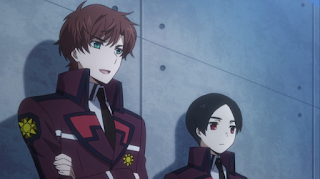
While Tatsuya is doing all of this, he's meeting plenty of folks at school, of course. It's a bit touch and go in terms of how well developed the rest of the cast is. His sister, Miyuki, is interesting. On the surface she seems like she's just a very powerful magician with a big brother complex but it's through her that we start to understand just how different Tatsuya is as well as the siblings connection to the Yotsuba, one of the most powerful magician families in Japan.
Their friends and classmates are where we see things bounce between reasonably well developed and cardboard. Erika Chiba is probably the most interesting of the bunch, and it could very easily work if someone wanted to make a spin off series based on the Chiba family seeing as they're all very good sword fighters with several of them involved with law enforcement or the military. Meanwhile Mikihiko's whole thing with summoning spirits and the accident that the series hints at suggests there's quite a bit to explore with this character. Leo and Mizuki seem nice enough, and help keep things feeling light from time to time, but they aren't really all that well developed in comparison to Tatsuya and Miyuki's other friends, and, if anything, I get the sense that Mizuki is mostly around for the purpose of fan service.
The student council has its fair share of members that are introduced to us, but only a handful of them get fleshed out in any way. Mari has her moments during action scenes, but it's more Saegusa and Jumonji that are of particular interest since both of their families are two of the other top magician families in Japan, so they get involved in the political side of mage life outside of school.
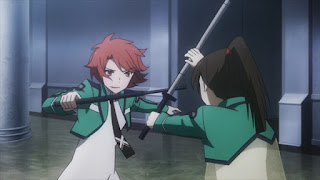
One person I'd like to learn more about, though, is Masaki Ichijo, as he's the closest thing to a rival that Tatsuya has in The Irregular at Magic High School. While there are a few other people that are straight up evil bad guys that Tatsuya fights from time to time, they were all just cannon fodder. Ichijo is seen as a prodigy at his own high school and the two cross paths at an inter school, magic-oriented sporting event. It was one of the few times where Tatsuya had to work hard to win, and made for some exciting action. There's obviously a lot more backstory to Ichijo, and I'd like to see it.
If anything, it made me more annoyed when the show tried to present Lu Gonghu as some sort of badass, but he wound up getting thumped again and against. For someone with a reputation for being a beast of a fighter, he got soundly whupped on multiple occasions, and not even by seasoned soldiers, but green, inexperienced high school students. The guy quickly devolved from potentially interesting villain to anti-climatic bore.
What with all of the magic getting flung around there are some pretty good action scenes. The showdown between Tatsuya and Ichijo is by far the best, but there are a few other scenes in particular that stood out. Erika gets in a few scraps that are reasonably entertaining, and there's a big multi episode battle towards the end of the series where everyone is fighting pretty much non-stop. They're fun scenes, but the big thing is waiting to see if Tatsuya will pull any particularly big rabbits out of his hat, which happens with increasing frequency toward the end of the series.
The quality of the animation itself helps quite a bit in enhancing the fight scenes (and everything else for that matter), as the show is quite pretty to look at. There's a nice use of color, glowing computer terminals, and, of course, all that magic. So, the series is very easy on the eyes, if a tad heavy on the blue and teal tones.
In the end, though, we're only about halfway through the light novel with a whole lot more that we need to learn about. We've been introduced to a lot of people, and we know that Tatsuya is secretly a freakishly powerful magician and brilliant engineer. There's also still a lot of mystery surrounding his and Miyuki's aunt. So, there's still quite a bit that we need to know. What will Tatsuya do with all that power? How will the world respond to the events of the last few episodes? When will Mr. Zhou be back? Just what is the Yotsuba family scheming behind the scenes? We'll need to see the anime cover the last half of the light novel to get answers to those questions. I'm remaining cautiously optimistic that we'll see more episodes at some point in the future. The anime proved reasonably popular, so there's a monetary incentive for the show to continue. It's just a question of how long it'll be before it returns.
In a nutshell, the show focuses on the Shiba siblings, Tatsuya and Miyuki, as they go to the top mage high school in Japan. Sorcery is something that has only recently awakened in humans, and has lead to several wars, so now each country does its best to educate magic-proficient individuals so to include them in their military. The school discriminates between two tiers of students which are kind of like honour students (called Blooms) versus regular ones (called Weeds) where the former exhibit exceptional skills in magic while the latter only average. Miyuki gets accepted as a Bloom, while Tatsuya enters as a weed. As the show progresses, though, we start to see that Tatsuya is hiding his true power and is on a level well beyond anyone in the school, and possibly one of the most powerful magicians in the world. So, the series largely acts as a slow reveal of who Tatsuya is and just what he is capable of with his magic.
This results in Tatsuya gradually earning the respect of his peers through his exceptional engineering skills, and we see the show be a bit of a story of acceptance. While wearing the mantle of a Weed, he has to prove himself on merits and show that these differentiations between magicians isn't necessarily as cut and dry as the establishment would have one believe. Thankfully there are a number of level-headed students who don't share these discriminatory Bloom vs Weed sentiments and are more inclined to judge one on the content of their character. Tatsuya quickly befriends these people, but there are still the stubborn ones that won't accept him simply because he's a Weed, so he has to prove himself to these folks, resulting them very much getting their comeuppance, which is oh so satisfying.
As all of this is going on, we start to see that there's a lot more to our protagonist here than he's letting on, and with that the show feels like a very gradual reveal of just how powerful Tatsuya is. Slowly we see that he is a brilliant engineer with amazing magical powers as we follow him through his day-to-day life in high school. The series ends on a crescendo with Tatsuya using some of his most devastating abilities, and left me hungry for more. This is where it becomes apparent that we're only halfway through the light novel in terms of content covered, but I'm cautiously optimistic that the series will continue at some point.
While Tatsuya is doing all of this, he's meeting plenty of folks at school, of course. It's a bit touch and go in terms of how well developed the rest of the cast is. His sister, Miyuki, is interesting. On the surface she seems like she's just a very powerful magician with a big brother complex but it's through her that we start to understand just how different Tatsuya is as well as the siblings connection to the Yotsuba, one of the most powerful magician families in Japan.
Their friends and classmates are where we see things bounce between reasonably well developed and cardboard. Erika Chiba is probably the most interesting of the bunch, and it could very easily work if someone wanted to make a spin off series based on the Chiba family seeing as they're all very good sword fighters with several of them involved with law enforcement or the military. Meanwhile Mikihiko's whole thing with summoning spirits and the accident that the series hints at suggests there's quite a bit to explore with this character. Leo and Mizuki seem nice enough, and help keep things feeling light from time to time, but they aren't really all that well developed in comparison to Tatsuya and Miyuki's other friends, and, if anything, I get the sense that Mizuki is mostly around for the purpose of fan service.
The student council has its fair share of members that are introduced to us, but only a handful of them get fleshed out in any way. Mari has her moments during action scenes, but it's more Saegusa and Jumonji that are of particular interest since both of their families are two of the other top magician families in Japan, so they get involved in the political side of mage life outside of school.
One person I'd like to learn more about, though, is Masaki Ichijo, as he's the closest thing to a rival that Tatsuya has in The Irregular at Magic High School. While there are a few other people that are straight up evil bad guys that Tatsuya fights from time to time, they were all just cannon fodder. Ichijo is seen as a prodigy at his own high school and the two cross paths at an inter school, magic-oriented sporting event. It was one of the few times where Tatsuya had to work hard to win, and made for some exciting action. There's obviously a lot more backstory to Ichijo, and I'd like to see it.
If anything, it made me more annoyed when the show tried to present Lu Gonghu as some sort of badass, but he wound up getting thumped again and against. For someone with a reputation for being a beast of a fighter, he got soundly whupped on multiple occasions, and not even by seasoned soldiers, but green, inexperienced high school students. The guy quickly devolved from potentially interesting villain to anti-climatic bore.
What with all of the magic getting flung around there are some pretty good action scenes. The showdown between Tatsuya and Ichijo is by far the best, but there are a few other scenes in particular that stood out. Erika gets in a few scraps that are reasonably entertaining, and there's a big multi episode battle towards the end of the series where everyone is fighting pretty much non-stop. They're fun scenes, but the big thing is waiting to see if Tatsuya will pull any particularly big rabbits out of his hat, which happens with increasing frequency toward the end of the series.
The quality of the animation itself helps quite a bit in enhancing the fight scenes (and everything else for that matter), as the show is quite pretty to look at. There's a nice use of color, glowing computer terminals, and, of course, all that magic. So, the series is very easy on the eyes, if a tad heavy on the blue and teal tones.
In the end, though, we're only about halfway through the light novel with a whole lot more that we need to learn about. We've been introduced to a lot of people, and we know that Tatsuya is secretly a freakishly powerful magician and brilliant engineer. There's also still a lot of mystery surrounding his and Miyuki's aunt. So, there's still quite a bit that we need to know. What will Tatsuya do with all that power? How will the world respond to the events of the last few episodes? When will Mr. Zhou be back? Just what is the Yotsuba family scheming behind the scenes? We'll need to see the anime cover the last half of the light novel to get answers to those questions. I'm remaining cautiously optimistic that we'll see more episodes at some point in the future. The anime proved reasonably popular, so there's a monetary incentive for the show to continue. It's just a question of how long it'll be before it returns.
Wednesday, 4 November 2015
Rokka: Braves of the Six Flowers Season One Anime Review
With an epic fantasy unfolding, an ensemble cast to dig into, nice art style, and an interesting, somewhat Aztec-esque motif (something you don't see very often in anime), there were a lot of reasons for me to really get sucked in by Rokka: Braves of the Six Flowers. The basic premise is something we've seen before where a band of adventurers must assemble to defeat an ancient evil, but the characters had some meat on their bones and the arch of the story evolved into a very interesting "There's a traitor in our midst" sort of thing that had me steamrolling through the whole season eager to find out what would happen next.
Basically, the story is such that a powerful demon king resides on the edge of the continent in which the show takes place. Every few hundred years, it has a resurgence in power and tries to send its army of demons out to conquer the world. To counter this, one of the land's powerful goddesses selects six people to join up and fight the demon king, with each of these individuals being marked by a six-pedaled flower tattoo.
A large chunk of the story revolves around Adlet Myer, one of those selected by the goddess to fight the demon king this generation, who comes off as a bit of an overly confident moron but grows into a much more interesting character with a developed back story that makes him a lot more sympathetic. It isn't just from learning about Adlet's past, though, as his interactions with everyone else makes him all the more endearing. He's the sort that will do his best to work together with others despite constantly claiming to be the strongest man in the world. Even if people don't want to believe him, which is the case for about half of the series, Adlet will do everything he can to bring them on-side.
This was particularly the case between him and Flamie, catapulting him to one of the most likable characters I've come across this year in an anime. It also made me warm up to Flamie herself, who plays the dark loner who pushes everyone away for fear of being betrayed. Sure, it's a character type we've seen many, many times in the past but the back and forth between her and Adlet is great, developing over much of the series. Watching this unfold, it's hard not to cheer for these two as they make progress, occasionally stumbling along the way.
When it comes to the other characters, they don't get nearly as much screen time as Adlet and Flamie, so there isn't the same opportunity for them to grow. There is some basic foundation work done so that we can get a basic idea of what they're like, but we'd need another season or two in order for this to have a chance to transpire (more about this later). Some of the characters suffer from fairly traditional archetyping like Goldof being the serious, loyal soldier and Hans the assassin.
However, Chamo could turn out to be quite interesting. She's the youngest of the heroes, and still quite immature. Maura pretty much has to watch over her and make sure that she behaves. I could see her coming into her own as she has the most to learn of the heroes. Maura herself, though, I'm not sure about. She's supposedly in charge of overseeing all of the Saints of the world, individuals entrusted with the power of the gods. For having such an important responsibility, she struck me as being awfully stubborn and a poor judge of character. Her actions struck me as odd more often than not given her position. Nachetanya as alright. She seemed like a naive princess out in the world for the first time more often than not, and it wasn't until right near the end of the series that we got a good idea of the sort of person she is.
As I mentioned earlier, the ancient South American theme to the civilizations in Rokka struck me as as a pretty neat idea. It's not something we see often and made for some nice settings. The main characters don't reflect this at all and have a much more straightforward fantasy motif to them, which is fine because they look great. I particularly like Adlet and Flamie's designs, but Goldof and Maura also look quite good.
The fight scenes are quite fluid and a lot of fun to watch. There's a particularly intense one between Adlet and Hans at one point that stood out for me and is at least on par with Adlet's skirmishes with Flamie. These smaller scale battles are where the show really excels, as they feel a lot more exciting and well choreographed than the larger encounters against hordes of fiends. In that regard, Rokka does a very good job, providing some very enjoyable fights.
Some folks seem to feel that the show as a bit slow paced, but I never thought so. There was steady action and progression with each episode in my opinion. We got introduced to the characters, learned a bit more about them and their ultimate goal, and had a major arch while they tried to find a traitor in their midst. All things considered, it was a very good first season.
It's just too bad that it seems unlikely that Rokka will get a second one. From everything I've heard, the show just didn't perform all that well and when that happens studios just don't consider continuing on with it, which is a real shame because Rokka finishes on such a huge cliffhanger. There is a fan translation of much of the light novel series on which the show is based, so those that enjoyed it can actually get some closure if they want. Nonetheless, it is a bit of a drag. So, anyone going into Rokka: Braves of the Six Flowers should be prepared. There's a lot to enjoy here, but as of this writing it looks highly unlikely that we'll see the anime go through the entire story. My fingers are crossed that this will change, though.
Saturday, 24 October 2015
Housekeeping: More Anime Incoming
Back when The Armchair Empire first started I decided it would be nice if there was a section of the site devoted to anime. Sure, it was a bit outside the "All Things Gaming" mantle that we were going for at the time, but it heavily influenced it. One just had to look at the art direction and narrative themes of a lot of the games coming from Japan to see that the medium played and important role in shaping video games.
So, for several years we included anime reviews. It was a pretty great time talking about the various series we loved but over time the output slowed in part because I wasn't terribly enamored with what was coming out at the time and also the early to mid 2000s was a crumby time to track down anime legitimately as it was a period of expensive DVDs with only a handful of episodes per disc. Eventually, we just pulled the plug on the anime section to focus on games, which were a lot easier for us to get a hold of.
Now here we are in 2015 and things have changed. Streaming online video is a booming business and companies like Crunchyroll and Funimation have come along making it very easy for people to get their mitts on mountains of anime cheap and legit. I've certainly been indulging myself in this renaissance.
With that, I've decided to discuss the medium on AE once again. It'll be somewhat sporadic, as I'll be review either entire series or taking them on a season by season basis, but it'll definitely be coming back as we head into November. It's been one of my other favorite entertainment mediums I've enjoyed since childhood besides video games, so I guess it was only a matter of time before something like this came about.
In any case, it seemed appropriate to put up a quick post to let you all know what's going on. I'll be look at series both new and old as I explore the medium, so hopefully you'll feel compelled to come along for the ride.
So, for several years we included anime reviews. It was a pretty great time talking about the various series we loved but over time the output slowed in part because I wasn't terribly enamored with what was coming out at the time and also the early to mid 2000s was a crumby time to track down anime legitimately as it was a period of expensive DVDs with only a handful of episodes per disc. Eventually, we just pulled the plug on the anime section to focus on games, which were a lot easier for us to get a hold of.
Now here we are in 2015 and things have changed. Streaming online video is a booming business and companies like Crunchyroll and Funimation have come along making it very easy for people to get their mitts on mountains of anime cheap and legit. I've certainly been indulging myself in this renaissance.
With that, I've decided to discuss the medium on AE once again. It'll be somewhat sporadic, as I'll be review either entire series or taking them on a season by season basis, but it'll definitely be coming back as we head into November. It's been one of my other favorite entertainment mediums I've enjoyed since childhood besides video games, so I guess it was only a matter of time before something like this came about.
In any case, it seemed appropriate to put up a quick post to let you all know what's going on. I'll be look at series both new and old as I explore the medium, so hopefully you'll feel compelled to come along for the ride.
Labels:
anime,
anime reviews,
housekeeping
Tuesday, 24 September 2013
Feature: Time Capsule - Sept./Oct. 2003
![]() |
| Soul Calibur II |
For those of us that hang on to magazines, I'm sure you can relate to sitting down on a rainy Sunday with a magazine four or five years old and re-reading articles or reading some of them for the first time. The Internet offers no such thing -- if you don't read something now, like, right now! then you'll probably never see it.
To combat this, we'll be running articles like this one to highlight content we've done in the past. Without further ado, here are a few links to content from The Armchair Empire that's a decade old. Maybe you won't cozy up with a coffee and donut, but maybe you'll remember briefly a time when things were a simpler and McFarlane Toys was pumping out action figures like Old Faithful.
Subscribe to:
Posts (Atom)


