Showing posts with label pc games. Show all posts

Monday, 11 April 2016

Revisiting Star Wars Republic Commando

There haven’t been a huge number of first person shooters set in the Star Wars universe, but when they’ve come along, these games have turned more than a few heads. Republic Commando was one such game to do this thanks to its enjoyable, easy to use squad-based campaign. Leading a group of four clone soldiers on a trio of missions, players were often kept quite busy fending off hordes of droids, Trandoshans, and Geonosians as they did the Republic’s bidding, ultimately catapulting the game to becoming a favorite among Star Wars fans.

When it’s functioning as a full-on squad based FPS, the game is a joy to play as one fights the separatists, barks out orders, and does their bit for the Republic. However, any time that the player is removed from their squad, the game loses something. Thankfully, these moments are far and few between, but when they happen the change comes into sharp focus.

As the name of the game suggests, players take the role of a Republic commando as his team go on a variety of missions. They’re in a unit called Delta Squad, so these guys are elite soldiers, usually being the first sent into a hot spot to establish a foothold for the rest of the Republic’s forces, or being involved in some sort of smaller special forces type of operation. There isn’t much in the way of a story. The game takes place during the events of the prequel movies, so one can see the overlap with events from those. What it feels like more than anything else is an adventure that might as well be called, “A day in the life of Delta Squad”. Under different circumstances, something like this would feel sparse in narrative, but it works here. The squad has its orders and need only concern themselves with executing them. None of this is to say that the story is cold and by the book, however, as there is a lot of banter between everyone while undertaking missions. It adds a humanness to each character, preventing them from becoming cardboard cutouts, and showing that these guys have personalities of their own.

This strong focus on the mission also helps to make the level design in Republic Commando feel more appropriate in the greater context of what’s going on. By the time this game came along, the old ethos of creating sprawling labyrinths to be explored was well on its way out of favor, being replaced by far more linear levels that had players jumping from one scripted event to the next. Sometimes this stripped down approach was difficult to swallow with certain games’ stories not lending themselves well to this type of level design, but it worked here since it so well suited to the systematic nature of the insertion missions that Delta Squad focused on. Sure, there were corridors and passageways conveniently blocked off by debris, but special forces units aren’t about bumbling through a maze, hoping they miraculously stumble across their objectives. They go in with useful intel so that they can get the job done as quickly as possible, and hopefully without incident.


Working with the squad as they do this is where the game really shines. It’s very straightforward giving orders to its members, lovingly named 07, 40, and 62 by the Republic. On the first level while attacking Genosia, players are slowly introduced to the members and the basics of squad commands. Everyone has separate landing sites, so you start off on your own and the rest of the team slowly join as you progress through the level. All the while, one gradually gets more and more opportunities to plant demolition charges, splice computers, and setup sniping or grenadier positions.

After a short while, all of these commands go from being quaint to essential as the team’s weapons don’t exactly hit very hard if they’re relying on their rapid fire blasters. It’s very important to assess any situation, and get people sniping and / or tossing grenades, while possibly also pointing out priority targets if a particularly powerful foe attacks. These weapons hit a lot harder and end fights much quicker, preventing the squad from getting overwhelmed. It’s also far more enjoyable taking a lay of the land, spotting optimal spots to snipe from, and learning the most effective ways to deal with enemies. Unfortunately, sniping and grenadier spots are determined by the game itself, with them being made known when your reticule passes over one of them, meaning that players can’t position squad members however they please. It’s not so bad, though, as there are usually a decent number of places where they can set up shop.

Once the game gets going, it’s quite satisfying to bark out orders, clash with tons of droids, Trandoshans, and the like. Things can get hectic in a hurry too with a good dozen or so enemies running around, while some weapon platform unloading on the squad from a distance, and droid dispensers spitting out yet more combatants, all the while trying to provide cover for one of the commandos as they frantically splice into a computer. This is where Republic Command is at its best.


However, as I mentioned earlier, there are times when you aren’t with the squad and things are nowhere near as entertaining. Thankfully, these instances aren’t all that frequent, but when they happen it’s hard not to notice the drop in excitement. Early in the game, it’s all very forgivable as the first few areas are like mini tutorials introducing players its mechanics. Enemies die fast and you aren’t really expecting anything because, well, the game just started. Things take time to ramp up. The problem comes later in that Geonosian assault because things really do ramp up. Droids everywhere. Some rather large and scary. Everyone scrambling to rescue comrades, snipe bugs, and basically doing their best to survive.

Then the second mission starts on a Republic acclamator and the squad each infiltrate the ship from a different area, forcing the player to fly solo for a while. This is where it becomes easy to see just how important the squad mechanics are to enjoying the game, as things taper off considerably until you’re reunited with everyone else. The level of intensity takes a dive as the number of enemies thrown at the player is reduced, which makes sense given that it’s only you and contending with hordes of baddies would have been overwhelming. However, the way enemies attack just isn’t very interesting. It’s usually just small packs of Trandoshans that come running up and are fairly easy to dispatch, especially once you start utilizing the shotguns that they drop.

It’s not very difficult and it’s not much fun either. The only time things get tough is when the game goes for scripted events and just drops enemies on the player out of nowhere which you either react to or die, think “Well, I won’t do that next time…”, get past the obstacle and move on. Exacerbating the matter is that this drags on for too long. It’s a relief once you start finding your squad mates again and can get back to doing more interesting fights, especially by the end of the mission where things really start to pick up, which just shows the contrast all that much more between squad and solo play in the game. The acclamator just feels like a low point in Republic Commando.

That being said, a lot of people still hold the game in high regard. It’s not like you need to run solo very often anyway, and when it comes time to do the final mission on Kashyyyk you’re with your team the vast majority of the time except for a little bit toward the very end. Ultimately, the simple, easy to use squad tactics are very appealing, and nowhere near as in-depth as something like Ghost Recon or Rainbow Six. It gives players the simplest of tastes of running with a group and giving them orders so to complete a mission mixed into the Star Wars universe, and that is plenty good for most people.

There aren’t a huge number of Star Wars first person shooters but when they come along they tend to be well done and Republic Commando lives up to that expectation. It pushes all of the right buttons for fans of the franchise while providing a fun, basic squad-based approach to combat. Sure, going it alone is not quite as fun, but it’s something that can be overlooked for the most part.

One thing that is difficult to overlook, though, is the music for the end credits, which is generic butt rock for some reason. It makes no sense after all that Star Wars music in the game. Why is it there? Weird.

That aside, Republic Commando is one more title to slide into the “Good” shelf of licensed Star Wars games. Even now, several years after its release it’s well worth revisiting. If you’ve never played it before, May 4th is almost here, so maybe now’s the time to try it.

Monday, 4 April 2016

Hyper Light Drifter

Hyper Light Drifter Gameplay Screenshot 1

Having been watching this game off and on since it was announced, I’ve been curious just how Hyper Light Drifter would finally turn out. It has some very eye catching visuals with very pretty pixel art that really helped the game to get its foot in the door, but it’s followed up with a Zelda-inspired experience filled with opportunities to explore and some reasonably challenging baddies to cross swords with.

There have been no lack of games to come along in recent years to go the pixelated route with obvious nods to games of the past. Some of these have been good, others not so much. HLD is definitely in the first camp. It’s visiting a lot of stuff we’ve seen before like the aforementioned Zelda series, but there’s just so much polish here. Combat is fluid and fast-paced, there’s a heavy emphasis on exploration and non-linearity, environments and characters hint at a massive backstory, and the aesthetic of the game is its own instead of just being another pixel art game that looks like something straight off the NES or SNES. This is the sort of game that serves as an excellent example of something that taps into retro games without feeling derivative; at the same time tapping into a lot of modern sensibilities.

Hyper Light Drifter Gameplay Screenshot 2
At its heart, the game has a lot in common with old classic Zelda titles with its overhead view, combat style, and so much exploration. In fact, combat feels smoother and faster than anything I’ve ever come across in a Zelda game. Given what HLD throws at players, though, it’s easy to see this being a necessity. It’s definitely a challenging game. That being said, I think most people’s opinion of this will hinge on how much they’ve played old 8 and 16-bit games of this ilk. If you have indeed played a number of those types of games, HLD will seem reasonably manageable, though still fairly challenging, but those who haven’t may run into difficulty.

Enemies all have patterns and tells to their attacks. One needs to simply pay attention for a moment and watch the baddies do their thing while making use of the dodge button so they don’t get hit. It doesn’t take long to figure out what types of attacks enemies do and what sort of animation they perform before unleashing it so that players have the good sense to get out of the way. It only gets really intense when a room locks the player in and a bunch of enemies spawn at once to swarm the hero. In this case, things do get dicey, requiring some fancy footwork to dodge everything enemies throw at the player. Even then, it’s not insurmountable. The game doesn’t just drop players into these situations. It eases them in. Players are slowly introduced to the different enemies, and only after making it a fair way into a given dungeon do they find themselves in such situations.

Bosses too are a matter of learning patterns. If anything, I found these guys easier than some of the swarming incidents. They have very discernible patterns that don’t take long to learn, and it’s simply a matter of execution after in order to take them down. Really, these were the most reminiscent element of 16-bit gaming in HLD for me.

Hyper Light Drifter Gameplay Screenshot 3
Your character also has a variety of unlockable abilities that can be purchased from trainers in the hub town of the game. While wandering around the countryside, players will gradually gather little yellow tokens and once they have enough they can be exchanged with the trainer for a new skill. These tokens are actually quite rare. They aren’t like coins that can be farmed to one’s heart’s content. They’re hidden in boxes and sometimes drop from enemies, but once they’ve been collected they never respawn. Also, once they’ve been spent there’s no turning back because the game automatically overwrites your last save after purchase, preventing save scumming whereby if players don’t like the ability they can just load up an old save and try something else. That just isn’t allowed here. As such, players need to think long and hard before buying a skill because once they have it that’s it, they’re stuck with it. If they want another they’ll have to head out into the wilderness and figure out where the rest of the hidden tokens are. So, in that regard there are some choices that have consequences in this game.

All the while, there’s quite a bit of exploration to be had. Players start in a hub town situated at the center of the world map with four exits: North, South, East, and West. From there it’s up to the individual to where they want to go. Generally each path leads to some sort of major temple where a boss is waiting to be defeated and some ancient device needs to be activated, but along the way there are no lack of detours to go on. There are a number of smaller power devices and keys that need to be found in order to get to a boss, so players need to wander around and find all of these as well, venturing down different paths. Some of these can be quite hard to find, and actually require you to run your character against the edges of an area. At some point, they may pop into a hidden passage tucked away behind a building or beneath a canopy of trees. They can be tough to see, but once found it’s quite satisfying, especially because they usually lead to useful goodies like more yellow tokens, health packs, or dungeon entrances.

Hyper Light Drifter Gameplay Screenshot 4
As one wanders this world, it’s hard not to wonder about its past. Just from looking at the surroundings, it’s obvious that players are in some sort of post apocalyptic setting. There are ruined buildings, old broken down robots, and dilapidated cannons everywhere, overgrown with foliage, being clear remnants of a fallen civilization. With all of this, though, we don’t get much explanation of how all this came to pass or why we’re doing what we’re doing in HLD. This is a very intentional approach, as the game has no dialogue in it. Any time the player talks with an NPC, they aren't greeted with a text bubble. Instead, a window opens with a series of still images depicting a short story. It’s enough to get the idea across but leaves a lot open to the imagination. While it does leave the player with some questions, at the same time it helps build a sense of wonder about HLD’s world as one tries to fill in the blanks on their own.

Also building this sense of wonder is the game’s aesthetic, as it has some of the nicest pixel art to come along in the last little while. HLD’s graphics very much have a personality of their own in terms of character and enemy designs, environments, and even the color scheme. As mentioned earlier, far too many pixel art games simply mimic things we’ve seen in 8 and 16-bit consoles, but this one does its own thing, allowing HLD to clearly stand out from other pixelated projects available.

The music also helps to enhance the experience. It has a very analogue synth feel to it reminiscent of Blade Runner. The game has the same composer as Fez, so it’s easy to see the similarities between the two. It works quite well here with the generally mellow, whirring minimalism of the synthesizers building the sense of wonder and loss permeating through HLD’s world.

Hyper Light Drifter Gameplay Screenshot 5

In the end, Hyper Light Drifter is a game people who like Zelda-esque action adventures should consider spending some time with. There have been plenty of other games to come along and provide similar experiences, but HLD is so much more polished while developing a personality of its own. The game is fairly challenging, but by no means impossible (if anything, I’d say that the Dark Souls series gives me more trouble than this did). With games like Dark Souls III, Quantum Break, and the HTC Vive coming out about now, there’s a chance HLD might fall between the cracks, but it’s a game that really deserves to be played. It just does so many things right, and looks great doing it.

Tuesday, 29 March 2016

An Early Look at StarCrawlers


About a year ago, StarCrawlers slinked its way into Steam's Early Access and since then has been getting regular updates as it makes its way to becoming shipshape for a full release. In a world where science fiction themed RPGs are vastly outnumbered by ones with a decidedly fantasy shtick, this one certainly got me to raise an eyebrow when it came along. Moreover, it's a dungeon crawler, and as such had me instinctively reaching for my wallet. Of course, with it being unfinished, this excitement could have been premature if playing it revealed a game needing much more time in the oven. After pouring a fair bit of time into the game, that's certainly the case to a degree, but thus far it seems to be more a case of sorting out some of the text in conversations than any game breaking bugs.

This is a first person dungeon crawler with procedurally generated areas, so, right off the bat, one can see that exploring, fighting baddies, and collecting loot will be a big part of StarCrawlers. While there is an actual main line of quests with a story, most of one's time can be spent wandering futuristic corporate offices, derelict space ships, monster-infested mines, and the like without paying it much mind.

Players have a space station referred to as STIX that they use as a home base between jobs. It has basic amenities to help aspiring crawlers do their job better. There's a shop for buying, selling, and upgrading gear, a medical bay for patching up badly injured party members and resetting talent trees, there's a black market for playing a lottery to get gear of varying degrees of quality, and, most importantly, a bar.

The bar is where StarCrawler's main quest line advances and where players can find the job board to accept new missions to go on. Jobs are divided by difficulty and can be told apart by their color coding. Gray jobs are of a low level and will be very easy for your team to complete, green are also easy but not complete pushovers, yellow are slightly challenging with enemies a level or two above your party, and red are hard missions with much stronger enemies. As one would expect, pay and experience gets better and better the harder a mission is. Your reputation with various corporations will also impact what jobs are available. Obviously, if you've pissed off a particular faction, they aren't going to be offering you work. Also, most of these companies are trying to screw one another over constantly, so completing missions will put you in some of these factions good graces while steadily increasing the ire of others.

It's also possible to recruit new members for your team at the bar. These are actual individuals that are being hired, though, and not a class of character that can be recruited again and again. For example, once you hire Bob the Force Psycher, he's your Force Psycher. You've made a commitment to this guy. It doesn't appear to be possible to have multiples of a particular class in a party. Given that each class has talent trees with three branches this also means that one can't have two of one class in their group with each character accentuating a different branch of the tree, which is a bit unfortunate.

The classes themselves are pretty neat. More or less they follow typical RPG party rolls with tanks, damage dealers, support, and the like. However, there doesn't appear to be a bonafied healer. Protecting characters is performed more through covering them in shields and other buffs or just getting a soldier to tank harder, rather than belting out some sort of curative ability from time to time in order to replenish an injured party member's health. There are health packs one can carry around with them and use as needed, though, should traditional healing become necessary.

So far, there are eight different characters available. Players can recruit all of them eventually, but they must choose four to go on any given mission while the rest stay behind on the space station. Since the different recruits have three different branches to their talent trees, they can serve a variety of roles. Depending on one's disposition, some pretty adventurous builds can be had, but they also have some fairly traditional progress paths as well. For instance, once I saw that soldiers have a lot of tanky options to them, I chose to accentuate that rather than fiddle around with heavier damage options. Similarly, cyber ninjas can be very good at dishing out damage, so that's what I've been focusing on with that class.

The roles that have caught my attention the most are ones with support capabilities and the caster classes. For the former, engineers and hackers have struck me as the most interesting. Engineers use spare parts like a resource (think mana) which they use to issue orders to their pet robot. Her talent tree is divided such that different types of robots will be made depending on which branch players spend points in. This can lead to a tank-oriented robot, a damage dealing robot, or a support robot. The nice thing about this is that as a result players can add more units to their party in the form of their robot while out in the field. Hackers, on the other hand, are very much a support class. Most of their abilities in battle are either damage over time attacks, crowd control / debuff skills, or applying various buffs to the party. These characters don't hit very hard, but over the long haul can be very helpful in a fight. As their name suggests, they can also be quite useful when hacking into various terminals and trying to disengage various security systems.

Looking at the casters, these are divided into two types: Force Psychers and Void Psychers. The former has powerful attack abilities and can shield party members. However, they have a very finite amount of force points available to them so battles need to end quickly or their usefulness begins to trail off quickly once they run out of force. Void Psychers are known for being slightly insane and have an enrage mechanic to play off of. Most of the abilities they use build up a void meter that counts to 100. Once it gets over 50, this character becomes increasingly unstable and there's a risk that they'll lose control, releasing a massive explosion of void energy that inflicts damages on all enemies and all allies alike. However, they also have abilities that consume this energy, bringing the meter back down. With that, players need to manage it, letting it go up and risk losing control so to unleash these abilities. It's a particularly dangerous situation because many of their best abilities require quite a lot of void energy to hit hard or even use in some cases. At the moment, I'd argue that Void Psychers feel a little bit overpowered. Once they get going, they absolutely demolish enemies, especially once they start getting to the strongest abilities in their talent trees. Even with the risk of running wild, as long as players are mindful not to get their meter all the way up to 100, the chances of this happening generally aren't that bad.

About the only major problem that I've run into while recruiting new members is that they come in at whatever level the rest of your party is at the time of the hire. So, if you recruit one and wait till later to get more (because these guys do cost a fair bit early on), once you recruit the rest and feel like using them as a B-Team the early recruits will be falling behind in levels. Worse still, random mission assignments match the average level of your group, so if you do have one or two characters that were recruited early, but kept on hold till later, they can become a liability on these missions since they're so far below the recommended level.

That being said, if the group is of a recommended level, the game does feel a little bit easy so far. My main team consists of a soldier, hacker, force psycher and void psycher, and these guys are demolishing everything that the game throws at them. About the only trouble they've run into are some of the more advanced security units that either hit really hard or constantly summon robots into a battle. Even then, the void psycher's miasma ability is a powerful area of effect damage over time ability that usually hits every enemy on-screen. Meanwhile, all of my party members have very good weapons and armor, so they can hit like a truck even when not using abilities. In fact, my hacker has a pair of blades at the moment that inflict a DoT of their own, plus her own DoTs, plus the miasma ability, so each turn enemies often take over 100 damage without my party even doing anything once all of those are up. With that, pretty much everything melts in front of this group. I've yet to come across a truly devastating foe in the game as a result, not even some type of boss, resulting in the game feeling like a bit of a pushover at the moment, even when doing missions of the hardest difficulty.

Loot in StarCrawlers has an easy to understand color coded system which has become prevalent in RPGs. Grey is common, green is somewhat rare, and blue is the rarest. As one would expect, the rarer the gear, the more powerful it is. There are only four slots on each character, so there isn't a huge amount of stuff to go around, just weapons, shields, armor, and accessories. Also, some attribute slots don't do anything at the moment since the game is still in development and just have the acronym NYI, which I assume stands for "Not Yet Implemented". By the looks of things, though, the developers do want loot to be a draw for the game as people hop into dungeons again and again in search of better gear.

If players are going to be replaying areas constantly, the levels and enemies better look good, and they do here. There are a decent mix of environments to explore, though it is recommended to read the description of a mission before hand to get an idea of where you'll be heading. Failing to do this could result in players going to corporate offices or mines constantly, and getting bored of seeing the same environments over and over. The levels themselves have a nice atmosphere to them with dim lights, various bits of furniture, computers, and equipment appropriate to their settings. They don't have a huge level of detail, but they get the job done. Enemies also look good, but their variety is a bit lacking at the moment. I've fought legions of the same types of robots, space mites, worm-thingies and the like without much deviation from this limited range of baddies. Hopefully we'll see more added by the time the game is complete because as it stands, things could get redundant if more enemies aren't added.

Given that the places players go to are procedurally generated, there's a bunch of variety in that regard. A lot of art assets are obviously the same, but going around the levels, watching out for traps, hacking into computer systems, and just generally exploring is good fun. There's a mini-map that plots everything out as you go, and it can be expanded to show everywhere the player has been, so it's easy enough to figure things out. Basically, it gives a nice, quick means for people who like first-person dungeon crawlers to get their fix and be on their way. I haven't come across a dungeon that's taken more than 30 minutes to complete yet, so it's a very in and out experience.

This is where the appeal will come while playing StarCrawlers: hopping in for a quick mission or two and hopefully getting some snazzy loot. It's quick and to the point with straightforward dungeon crawling and combat. My only real complaint right now is the potential for neglected characters to get left behind and have difficulty catching up level-wise unless players bring them one at a time on missions until they've gained some levels, which could get tedious in a hurry. As it stands, there aren't very many first person dungeon crawlers on the market, and certainly not any with a science fiction theme. StarCrawlers could be the game to fill that void.

Sunday, 21 February 2016

Fairy Fencer F: A Surprisingly Good B Tier RPG

Fairized Fang
Back in the days of the PlayStation 2 there was a much greater range in pricing of games. We had the obvious super high-end stuff that would go for $50 (boy do I miss those days as we continue to see prices rise first to $60 and now $70), and there was the lower end of the spectrum where quality would often become questionable as the price dipped lower and lower below the $30 mark for a new release. Then we had the mid-tier stuff. It would usually cost about $40 and people would go into them knowing that they weren't going to necessarily be on par with the games at the higher price point, but they also wouldn't be on a level of the cheaper, generally badly made games. They'd provide a solid experience, usually with some interesting quirks along the way.

Fairy Fencer F very reminds me of those days. It's by no means the best of JRPGs but neither is it a bad game. What we have is a reasonably priced title with an interesting battle system and straightforward, humorous story. Most people will likely get through it in about 25-30 hours feeling entertained, glad that they made some time for the game.

This is another in the growing tidal wave of Vita games that have been getting ported over to the PC over the last few years, and that's the version that I played. With that, one shouldn't expect too many fancy features in terms of settings. It's a down and dirty port, but gets the job done. People who absolutely insist on a vast array of graphic settings maybe be disappointed, but the keyboard controls are okay-ish, or at least not as god awful as some other ports of Japanese games to come along in recent years. I can't comment on them too much, though, as I stuck with an Xbox 360 controller for the majority of my playthrough.

Tiara vs a giant robot
From the get go it becomes apparent that the story is very traditional fair. In the distant past, a goddess and demon fought for control of the world, but in the end it was a stalemate as their attacks forced each other into suspended animation. This in mind, the game becomes a race between the forces of good who want to reawaken the goddess and the forces of evil who would like to bring back the demon. It doesn't get much more cliched than this. With that, we follow the adventures of Fang, a young, rather selfish lad, who accidentally gets swept up in all of this when he pulls a sword out of the ground, becoming it's owner and being teamed with a fairy, Eryn, that resides within it. This makes Fang into a Fencer, a person who wields a fairy-imbued weapon. There are all sorts of weapons like this scattered through the land and they can be used to release the goddess or demon, so Fang, Eryn, and a growing group of friends set out to find them all before the evil Dorfa Corporation can do the same for the vile god.

What makes the heavily trodden story palatable is the cast of characters, as their interactions can often be pretty funny. Pippin is by far my favorite of all the people I encountered with his self-important, yet friendly demeanor. Others had their moments too, like Glados' budding bro-mance for Fang, and Harley's overzealous desire to learn more about fairies. There are also a few moments of obnoxious fan service. I'm not a fan of that sort of stuff, so tend to get annoyed by it, but thankfully they're far and few between. It is also possible to recruit two optional characters into the party if certain conditions are met. They aren't necessary, but are fun additions to the group making them worthwhile to pursue.

While playing Fairy Fencer F, people familiar with some of Compile Hearts' other recent RPGs will notice a lot of similarities, especially if you've played some of the Neptunia games. Things bounce between a hub city where one picks up new quests, buys items at shops, and talks to locals, and a world map where one moves an icon around, selecting specific locations to visit. It's a stripped down method that very much limits opportunities to explore, but adds a certain amount of brevity to getting around. It is also possible to modify any given region if you use the correct fairy. This will change the types of monsters that spawn there, which becomes necessary when doing side quests handed out at the local tavern.

Good ol Pippin

Battles while hunting these monsters (and pretty much everyone else) are the strong point of the game. Combat is turn-based on a fairly large field where enemies and your party can more around, trying to get into range of one another and unload with various attacks. There's the expected abilities like special attacks and spells which consume energy, but what is really fun is developing combos. These are actually cobbled together outside of combat in the game menu. For this, players assign different attacks to different buttons, many of which play into one another. Then, when combat begins, if you bring a character within attack range and begin, instead of simply doing a normal attack you can string it from one into the next, selecting what you want to do as you go. This is useful when trying to exploit an enemy's weakness. Since everyone in your party are Fencers, their weapons can actually morph on the fly from swords to scythes to bows to guns and so forth which plays into the combo system since you can then select which attack to do next and go with something that will do the most damage to enemies. Early on, there isn't much one can do with combos, but as you spend ability points to improve characters stats and unlock new abilities it becomes possible to add new strings of attacks to a combo.

As fancy as the combo system is, combat is actually quite easy much of the game. For the first 10 hours, battles were extremely easy as my party steamrolled everything in their path. After this, there was a mild difficulty spike but this was more a matter of fights taking longer than becoming insurmountable. I did wind up unlocking Apollonius, which required grinding up to level 40, and this can make some areas of the game easier as well, so that is something to keep in mind. The only area that came off as truly challenging was Shukesoo's Tower, which is optional content anyway. The ease of battles doesn't really take anything away from the game, as they're still enjoyable trying to find the best combos and spells to unload and see if you can outdo yourself with the amount of damage your group can dish out in a single turn. People expecting tough, unforgiving battles, though, just won't find that here.

Goddess and vile god
The game isn't exactly a looker either. A lot of the areas, art, and backgrounds have a fairly standard anime-inspired look to them. Apparently Yoshitaka Amano and Nobou Uematsu contributed to the game, but I had trouble identifying where they may have had a hand in that. I'd have to imagine the former designed some of the monsters, as some of them looked quite unconventional. However, I'm still scratching my head trying to figure out which parts of the score may have been done by Uematsu. The music as a whole is decent, though the tunes that plays when characters Fairize (ie. take on a more powerful form) is pretty cheesy and gets stuck in my head more than I'd like.

Shortcomings aside, I still enjoyed going on this little adventure with Fang and the gang. Fairy Fencer F by no means tries to reinvent the wheel. It simply provides a fun story with some enjoyable characters and a good battle system. The game's publisher was also smart enough to give the game a price that reflects this, so I didn't feel at all out of pocket for the experience I had. People with a hankering for a pleasant, straightforward JRPG should give some serious consideration to this game.

Wednesday, 9 December 2015

Early Thoughts on RWBY: Grimm Eclipse


Not too long ago, a game based on the RWBY series made its way onto Steam's early access doodad and I was kind of curious about it so decided to give the thing a try. The developers say that they're going for something along the lines of Dynasty Warrior and that is very apparent as the game throws tons of enemies at players in big groups to hacked and slashed through. There are only a couple of levels to try out so far, but it's about an hour of content so you're looking at around four hours if you want to get through everything once with each of the four characters.

Everyone does play fairly differently from each other. Ruby has her scythe and tends to swing it around in big arcs, making her more adept at taking down large packs of enemies herself. Weiss uses a rapier and attacks much quicker than the others. Blake has her sword but feels much better at focusing down single targets like bosses. Yang uses her fist weapons to punch everyone and can lock onto targets pretty easily.

Each character also has some sort of integrated gun in their weapon but I've not found much use for these things yet. There was one enemy type in the mines where it made a lot more sense to shoot at them from far away since they radiated a weird green goop and damaged for a lot on death, but other than that all the rest of the baddies needed to be dealt with up close.

The girls each have three special moves that consume bars from a meter at the bottom right of the screen. They're some sort of assortment of single-target and area of affect abilities with the different characters leaning a little bit one way or the other depending on the person. The meter itself most often gets refilled by either leveling up for a full recharge or by landing a certain number of attacks in a row without being hit by enemies for a trickle of recharges. There are a few other instances for this like when being revived by a team mate and from a few of the options in the talent tree, but these don't happen nearly as often.

Combat itself is very fast-paced as one would expect from a musou game. It's fluid with large packs of enemies to fight. There's about 10 different types of baddies so far ranging from weaker fodder that attacks in swarms to stronger ones that have much larger hit point pools, can defend themselves, and have special attacks. The levels themselves are fairly linear corridors so enemy encounters tend to be around certain areas where trouble breaks out and the girls have to fend off the creatures, or there will be an area that they get stuck in for a period of time and have to fight against several waves of enemies. There was also an escort mission trying to get a bomb on a mine cart to fall into a pit, which was surprisingly entertain considering how dull escort missions in games can often be,

This is all done in a straight up multiplayer environment where up to four people can play together. One person will be the host while everyone else hops on board. The game scales its difficulty on the fly as people join and leave the session, usually by adjusting the number of enemies spawning as best as I can tell. You can theoretically be in a situation where you're playing by yourself if you host your own game and no one joins, but I've found quite a few people playing and not run into this myself. It's actually a lot of fun playing with others in RWBY anyway. Also, more than one person can play the same character, as they don't get locked out as someone selects them. So, if you happen to really want to play as Ruby, for example, and someone else has her already, don't sweat it, you can play her as well.

One minor, annoying issue with the multiplayer is that if the host leaves for whatever reason the game will reset to the last checkpoint as it assigns someone else in the group to hosting duties. This results in having to redo some of a level, which is a bit of a drag.

Redoing content is also a thing if your whole group gets incapacitated, making it a must to try and help fallen allies back up by running up to them and holding down E until they're back on their feet. Interestingly, you can still fight while doing this and just need to focus on staying close enough to the person who is down while holding the E, which is nice when compared to other games where you might be forced out of combat to help the downed teammate. Also, there is an ability in the talent tree that significantly speeds up your ability to raise others that is totally worth unlocking.

Speaking of talent trees, there is a very simple one here. Each session, players start at level one on their character and gain experience points by defeating enemies, completing certain objectives, and finding little artifacts hidden throughout the levels. Once the character reaches a new level, they'll get a point that they can spend in the tree, which is divided into four sections, one for each of the girl in question's special moves, and another which is like a general quality of life section for stuff like health regeneration, the size of your special ability meter, defenses, and so forth. It's not much right now, but does give a little bit more customization options to the player, which is nice.

I should note that with the way experience points are awarded, it does seem as though it goes to whoever lands the killing blow on an enemy from what I could see while playing. There were cases where I'd be using a more single-target focused character like Blake and be tearing into a boss, do 60% of the damage but still not get any experience despite doing the lion's share of the work, then on another session I'd be on Ruby, dive into a pack of mobs that the rest of the group were on and gobble up a ton of experience from landing a bunch of killing blows. I'm not absolutely certain this is going on because it can be tough to see the little note that you got some XP, but it certainly seems that way.

So far, the game is looking pretty good. There are only two missions in this build of the game, one in a forest, the other spanning an abandoned city and some mines, but the environments look nice. The characters too look quite good. The show is a sort of CG anime, so it translates quite well to a game. I have noticed that the frame rate is a bit iffy right now and had to make sure my drivers were up to date in order for the game to run smoothly. It is in Early Access, so this doesn't really surprise me.

The voice acting is actually decent as well thus far, but they are just getting the voice actors from the show, so this probably shouldn't come as a surprise. The girls don't actually say very much right now, though, other than some quick comments when they kill monsters, find goodies, or enter new areas. Much of the talking is done by whoever the person overseeing a particular mission happens to be.

With that, this little bit of RWBY that is available thus far in Early Access is pretty fun. The combat is fast, the characters are varied, and the aesthetic is nice, While there isn't a lot of meat on the game's bones just yet, it is making a good first impression. Often times when I grab something on Early Access, I get it, play it for a while, then forget about it. With Grimm Eclipse, I actually find myself looking forward to future updates with more content being released so that I can try it as soon as possible.

Friday, 4 December 2015

The Ultimate Troll Gift is Coming to Steam in 2016

It's always nice to have a bit of a cheeky giggle buying friends horrible games as gifts during a Steam sale. Login, slap down a few bucks on something ridiculous, send it their way, wait for the inevitable, "Thanks a lot, jerk!" reply, and having a good laugh after. Choosing just the right game is often a challenge. What will it be? How about that one where you raise unicorns? Hatoful Boyfriend is always good for a chuckle. Decisions, decisions.

Now making up your mind about what terrible game you want to send to a friend so that you can laugh at them and all of his or her other friends can judge them harshly has become a whole lot easier because Monster Monpiece is coming to Steam in 2016.

That's right. That game that helped the Vita make the leap from "Another failed Sony handheld" to "What kind of fucked up, sexual deviants make up this system's user base?" in the gaming sphere's collective mind share is making its way to PC, uncensored apparently.

I'm not going into too much detail about the game here, but one of the main mechanics on the Vita version was to aggressively rub the image of scantily clad anime girls (Wikipedia link here if you really do want to learn more). It's creepy as fuck, and just by looking at the animated GIF I've included with this article, it should give you an idea of the horrific rabbit hole that the game is leaping down, not to mention you'll probably have to register as a sex offender in some states just for looking at that horrible thing.

So, get those credit cards ready to put some friendships to the test! A new age in Steam gift trolling is almost upon us.

Saturday, 24 October 2015

My Biased View of What a PC Adventure Game Is

I've never been a huge fan of adventure games, but have been playing them a bit more recently. Growing up, friends more into the genre would be chatting about the latest game with "Quest" in the name, Willy Beamish, Maniac Mansion and the like, telling each other how they got past certain puzzles. I even ventured into these games from time to time. As the years wore on, certain expectations began to solidify in my as to what an adventure game "should be".

Are the areas meticulously handcrafted set pieces? If so, that's one sign it could be an adventure game. Is there a fairly involved, well-realized story? Also a sign that it may be an adventure game, but be careful, it could also be an RPG. Are there mind-breaking, often times obnoxiously obtuse puzzles? If so, then it is most certainly an adventure game. The more I play these games now, the more I expect these ingredients to be mixed together.

The problem is that nowadays, the genre seems to have splintered in two directions: traditional point-and-click games, and what feels more like an interactive story. In recent years, we've seen the rise of Telltale Games where their games have been lumped into the adventure game category.

While I do enjoy what Telltale is doing, I have a difficult time really accepting their games as being adventure. The one strong feature that they have is the storytelling. In this regard, the games are great to experience. Good dialogue, well-paced plots, and often with a tasteful amount of humour. As far as their stories go, they're great, but after that I start really questioning whether I should look at what they're doing as adventures.


A lot of the areas don't really feel like set pieces. They're still relatively small, contained areas, but the detail isn't there. There's a certain wow-factor I feel when changing screens to a new area for the first time in point-and-click adventure games that is lacking in the Telltale universe. Going into new zones in King's Quest, The Longest Journey, or even Deponia all manage to impress me with all of the little details that are inserted and it leaves me wanting more as I progress through those games. The lack of detail in Telltale's adventures makes it so I don't feel this in their games.

Moreover, the puzzles are comparatively rudimentary in Telltale adventures. I know to a degree they're trying to appeal to the widest audience possible, so there's a degree of dumbing down at play, but I wouldn't mind if the puzzles were made at least a little bit more difficult. I'll be the first to admit that some of the more out there puzzles I've come across in adventure games have been infuriating, and I don't blame people for wanting to avoid those things. However, it feels like the pendulum has swung too far in the other direction now. Many of the puzzles that I come across in Telltale adventures can be figured out in a few minutes. It would be nice if a happier sort of medium could be found.

All of this isn't to say that I dislike Telltale's games, as I do enjoy them. The stories are usually quite well done, and it's that which keeps me playing them. It's not often that I come across a game with a story that I find as engaging as what they're doing, but this just leads me to look at their games more as interactive stories rather than adventure games. I know it's a biased viewpoint to have, but it is what it is, and I tend to still look at point-and-click as true adventure games instead.

Friday, 23 October 2015

Freedom Planet and Waxing Nostalgic for the Genesis

After being engaged in a grueling staring contest with it as the game sat in my Steam library for months, I've finally gotten around to playing Freedom Planet. Its aesthetic had caught my eyes as it screamed 16-bit. The character designs, the environments, and the use of color all brought back a flood of memories from the heyday of the Sega Genesis. The game really does bare a resemblance Sonic the Hedgehog and it isn't just how it looks but to some extent how FP plays as well, as it does go for the "Gotta go fast!" mentality that is so prevalent from Sega's series. All the while, there's an element of exploration from trying to find all of the collectibles scattered around a level. Part of me kept thinking that I should be annoyed by this while playing the game because it does make for bit of a stilted experience from all the zipping around at full throttle, then slamming on the breaks to look for stuff. However, that just wasn't the case. The ambience of the game, combined with the platforming, and boss fights made me enjoy FP quite a bit and overlook that.

For someone who quite likes revisiting games of old and has a soft spot for the Genesis, FP really is something special. It can't be said enough how much the developers nailed the whole 16-bit Sega era in terms of visuals and animation here. The game looks like something straight out of 1994 or so when games on the Genesis were starting to look really good. There's a lot of detail without going overboard, smooth animation, and the color palette really pops off the screen.


The levels are actually really big. While there's a clock counting up from the start of each stage, I quickly began to ignore it. Exploration has always been a big thing to me, as I've mentioned before while playing Skyrim, so poking around and finding all of the things was far more of a priority than speed running the game to complete stages in as little time as possible. I'd go so far as to say that speed running the story mode levels on the first playthrough does FP a disservice. A lot of the fun comes from poking around trying to find everything, It brings back a lot of memories of playing Metroid and games of that ilk, just methodically checking every nook and cranny.

About the only area of the game that left me with mixed feelings was the voice acting. While it is very good, there's just so much of it. The cut scenes are very long in FP. They have a Saturday morning cartoon vibe to them, and do bring out the occasional chuckle, but they really do a number on the game's pacing. After downing the boss for a level, while I do like a bit of a break for advancing the story, a bit more brevity would have done wonders here. This is pretty much the one area where they game falters for me.

While the voice acting was a bit much, the music is amazing, and I can't get enough of it. The composer really nailed the feel of 16-bit platformer soundtracks. Thematically it's spot on, and the instrumentation does an interesting job of straddling itself between the bleepy bloopiness of the 90s and more current sounds. It's easily one of my favorite soundtracks to come along in the last few years.

With the huge wave of pseudo retro games to come out in recent years, there's just so much to choose from. Action games, RPGs, platformers, adventure games, you name it. Players have some hard choices to make when considering picking up a game of this ilk, but I'd definitely have to recommend Freedom Planet. It does so many things right when it comes to recapturing the feel of Genesis-era action platformers. If you like Sonic and have a soft spot for video games of the early 90s, you owe it to yourself to check this game out.

Tuesday, 30 June 2015

Review: Car Mechanic Simulator 2015 (PC)

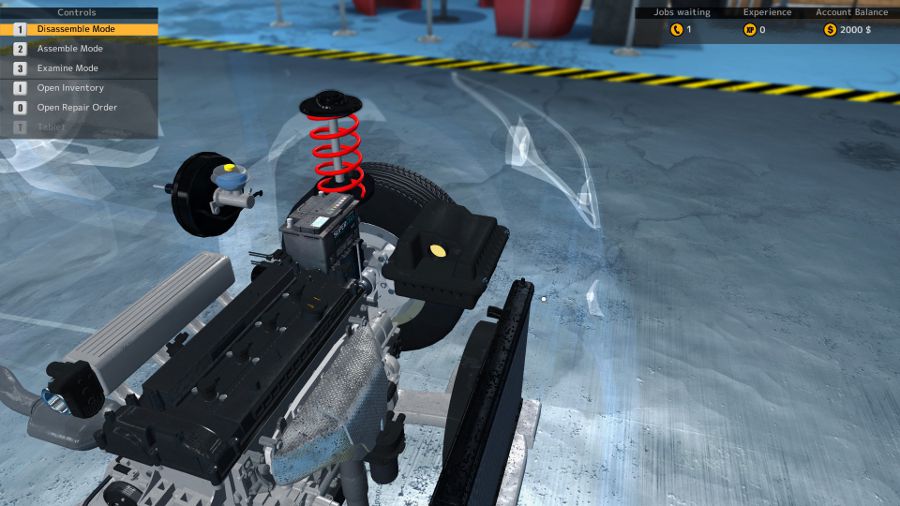
When a game title includes the word “Simulator” there's a justified expectation that there will be an exhaustive tutorial or at least an extensive manual to consult. Imagine dropping into a Jane's flight simulator or even something older like Falcon 3.0. Put in control of a jet at the end of a runway or on the deck of an aircraft carrier, and 99% of us would like explode or eject before getting the wheels off the ground. That's what Car Mechanic Simulator 2015 is for the narrow field of car mechanic simulators.

Review: Convoy (PC)

convoy pc review
Convoy's biggest problem is that every time I think about it I get a glimpse of The Simpsons episode “Maximum Homerdrive.” Through a cartoonish series of events, Homer winds up hauling cargo in an 18-wheeler. At one point a version of the diddy, “Convoy!” (or at least a version of it) is repeated.

“We're gonna drive this convoy...!”

And that little excerpt of song spins through my brain every time Convoy – the game – starts. It's really annoying.


Thursday, 18 June 2015

Review: The Witcher III: Wild Hunt (PC)

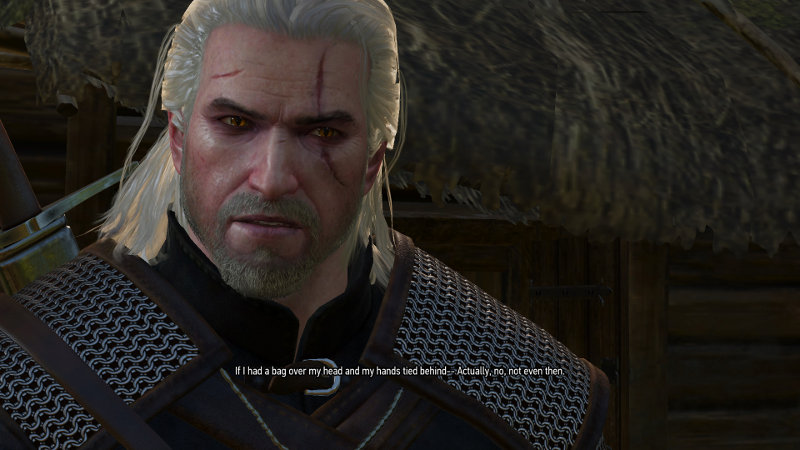
Everything you've read or heard about The Witcher III: Wild Hunt is true.

Those weird bugs, game-crashing or otherwise, you heard about from your second cousin; the glowing reviews by the vast majority of players and the enthusiast press (groups often on opposing fronts); the nudity from that weird guys you shared a bus ride with through a questionable part of town; the gritty violence of careful rolling and parrying; storytelling that actually weaves the world and it's inhabitants into an interesting whole; alchemy and magic; and the sweeping vistas of a game that packs a "Wow!" Factor of at least 70 when it comes to detail and texture.

Wednesday, 17 June 2015

Review: Slow Down, Bull (PC)

I have to say, I was pretty bummed out that Slow Down, Bull l had absolutely nothing to do with a Night Court reboot. If you'll recall -- if you're old enough -- Night Court was a sitcom that ran on NBC for 9 seasons starting in the mid 1980s and Nostradamus "Bull" Shannon was the towering bailiff that featured prominently in nearly every episode I can remember.

However, once clear of that particular "Hurdle of Disappointment," I was pleasantly surprised that a game so "cutesy" and obviously designed for mobile devices or touch screens could be so engrossing for quick play sessions.

Thursday, 11 June 2015

Review: Guilty Gear XX Λ Core Plus R (PC)

Any fighting game that asks you to "Solve for R" is generally a video game that is a pantless hobo doing a jig on a piece of cardboard while strumming a handmade banjo and reciting recipes from "Mastering the Art of French Cooking" (just volume 2). That is to say, entirely nuts but not without its own charm and sophistication. Guilty Gear XX Λ Core Plus R is one of those pantless hobos. (The "Λ" is stands for "Accent" in case you're looking for this one on Steam.)

Wednesday, 10 June 2015

Review: The Incredible Adventures of Van Helsing III (PC)

The Incredible Adventures of Van Hellsing III is the final game in a trilogy of action adventure games utilizing the isometric view of combat that the Diablo series has perfected. The respect and reverence that Hellsing III holds up Diablo is quite evident with the frequent "homages" and downright borrowings in some places. Besides some rather hot and furious combat in places, the game writers definitely did their best to keep themselves entertained by including a ton of horror/gaming/nerd jokes and Easter Eggs for those amongst us who have to click every imaginable surface or game texture. Myself, I averaged about one third of the available "surprises" in each area.


Monday, 8 June 2015

Review: Evolve (PS4)

evolve ps4 review
Welcome to the planet Shear. It's a roughly Earth-sized world containing a wide variety of flora and fauna, all of it inimical to human life. It's like Australia stretched out over an entire globe. Everything is either going to kill you deliberately or circumstantially.

So what could possibly be worth coming to such a choice hellhole of the Universe? Simple. Big game hunting. And we do mean BIG game.

Doing All the Things: Skyrim Edition Pt. 4 - The F Words

As far as I'm concerned, there are two F Words in Skyrim: Falmer and Forsworn. While I may have spent a good amount of time railing against the terrible spider menace threatening Tamriel, at least the creatures add an element of tension to the game. Any time a dungeon starts showing signs of webbing gathering on the walls, a sense of dread begins to well inside me. Meanwhile, coming upon a Forsworn occupied fort, or spotting the tell tale signs of a Falmer encampment elicits a bored sigh as I prepare for a good 20-30 minutes of tedium, clearing an uninteresting area of uninteresting enemies carrying uninteresting equipment.

What got me thinking this is a quest that I did while finishing up the Dawnguard arch. Before facing off with the vampire lord Harkon for a final showdown, players need to find a legendary weapon called Auriel's Bow in order to prevent the prophecy he wants to fulfill from ever reaching fruition. This requires exploring a cave containing some ancient ruins which are guarded by a Snow Elf, one of the last in Tamriel. He goes on to explain how his people were tricked thousands of years ago, and twisted into what are now known as the Falmer. It seemed a tad out of place. Here was the game giving me a vaguely interesting back story to a race that often times feels like filler meant to add padding to a dungeon.

Thursday, 28 May 2015

Review: GTA V (PC)

gta v pc
It's safe to say that Grand Theft Auto V is one of those games that just keeps on giving. And two years after its initial release on consoles, GTA V has reached its most potent form on PC. Besides an extensive single-player story that stretches across an expansive world, the game packs in a full suite of video editing tools to create exportable films, a complete multiplayer mode that's heavy on action, and another awesome soundtrack that features just about every genre of music one can recall.

Tuesday, 26 May 2015

Review: 3D Realms Anthology (PC)

Most of what comes packed with the 3D Realms Anthology is a painful reminder of the period in PC gaming when there were many, many stabs at trying to match what consoles were doing.

In a year that saw the release of the Super Nintendo Entertainment System along with Super Mario World, PC gamers were saddled with the likes of Arctic Adventure (a sequel to 1990's Pharaoh's Tomb, also in this collection) that starred "Nevada Smith." It was sad attempt at capturing the, oh, I don't know what... FUN! of 16-bit console games. And no matter how bad the games were, we PC gamers, at least around my neighbourhood, stuck it out hoping the playing field would level off. It took more than decade. All through the 1990s Apogee/3D Realms -- the evolutionary line between the two has always been blurry for me -- there were incremental differences and improvements to making a platformer work on a PC with the likes of Secret Agent (1992), Hocus Pocus (1994), Alien Carnage (1993), Dark Ages (1991), Bio Menace (1993), Monuments of Mars (1990), Monster Bash (1993), the horrible Truxton clone Major Striker (1993), Crystal Caves (1991), and even the the first couple of Duke Nukem games. Most of the games from this era are curio items your eyes would scan over at a garage sale and there's this momentary flicker of memory that makes you appreciate today's video games a whole lot more, even the terrible ones.

Monday, 25 May 2015

A Short Walk Through The Long Dark

Growing up, my parents used to drag my sister and I along to go cross country skiing. The whole time, I really did not enjoy it, and it instilled a life-long disdain for the outdoors within me. I think that the problem was that my folks were out of shape, and as such very, very slow. My sister and I would go blasting along, only to have to wait for a good 10-15 minutes as our parents caught up. It was very boring. So much so that I would dream up far fetched survival scenarios if I were ever stuck in the wilderness in order to pass the time.

I think this may have been what got me somewhat interested in survival games years later. How would I forage for food? Where would I sleep? How would I repel the zombies? Well, maybe not the last one, though there have been no lack of games in the genre that have been eager to throw hordes of the undead at players. That's one of the things that really appeals to me while playing The Long Dark. It's just me versus nature. A harsh winter in the mountains. The biting wind. Seldom having quite enough food or fuel to be comfortable. The need to press on in hopes of finding a new shelter because the place you've been staying is fresh out of supplies. All the while, trudging through the snow hoping to find a place you're not even sure exists while jumping at anything that moves for fear a pack of wolves is stalking you. It's compelling stuff made all the better by the corpses I discover kindly staying dead.

Friday, 22 May 2015

Review: Zombie Kill of the Week (PC)

Tazman: Zombie Kill of the Week Reborn (ZKWR) on Steam is a re-release of a game that came out back in 2010 (or 2013 depending on the source). ZKWR tackles the trope of zombie horde destruction in a 2D map with your character being able to shoot 360 degrees in what can only be described as one of the worst rotator cup tears of all time. The game art is very simplistic – I'd go so far as to describe it as a flash-game on steroids, but the visuals aren't the draw – the game speed is.

Aaron: Let's be very clear about this. Zombie Kill of the Week started as an Android game in 2013 (or 2010). That's not to say that Android games can't be fun or should somehow be frowned upon, but the gameplay doesn't lend itself to a PC game.